- Home >
- Informance >
- Piano Day Workshops (2026) - The Evolution of Piano Sound
Piano Day Workshops (2026) - The Evolution of Piano Sound
29 Mar 2026 @ 13:30 BST (GMT +01:00)
From Baroque Clarity to Romantic Resonance
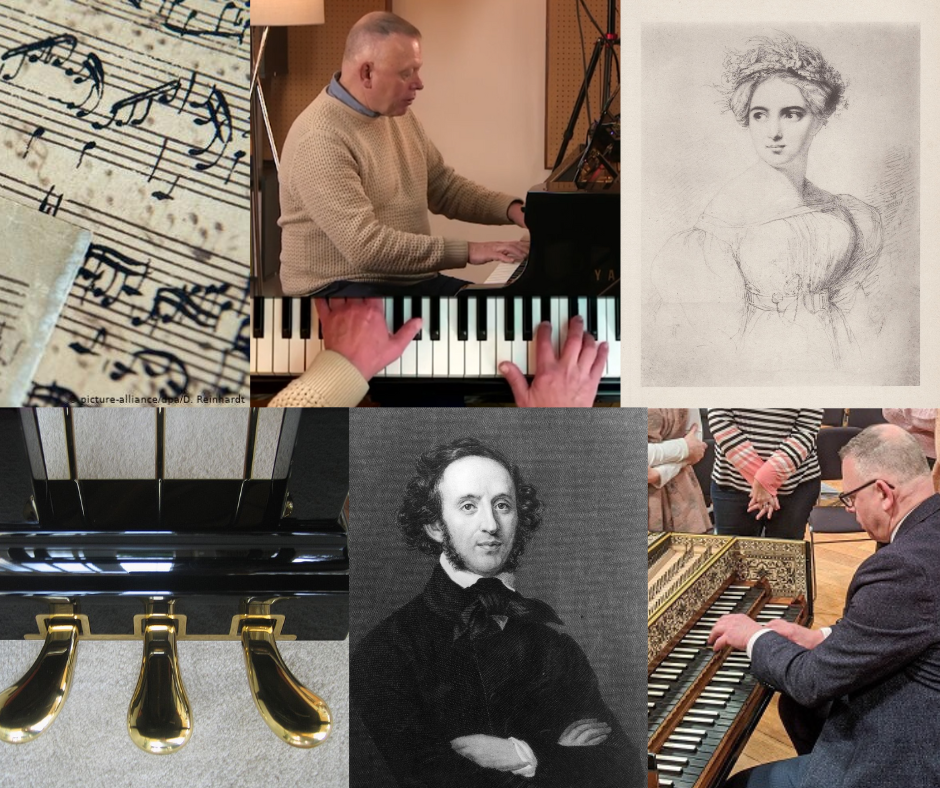
Celebrate Piano Day 2026 (29th March) with a fascinating online exploration by Graham Fitch revealing how composers’ changing demands transformed both piano writing and the instrument itself. Through two contrasting snapshots in history - one where pedal must be used sparingly, if at all, and another where it becomes indispensable - we trace the evolution of pedalling and consider what it means for today’s pianist.
We begin in the Baroque period, using works by composers such as Johann Sebastian Bach to consider how and whether pedal can be used appropriately in music conceived for a very different instrument. Leaping forward to the Romantic world, we discover how the pedal becomes essential for sustaining melody and enabling the rich three-layered texture in Songs Without Words by Felix Mendelssohn and Fanny Hensel, plus a precursor by Franz Schubert.
The programme concludes with a live Q&A session on applying insights from these sessions to your playing and other aspects of practising or playing in general.
Pedalling in Baroque Music: Yes or No? (13:30 – 14:30 BST)
The sustaining pedal didn’t exist in Bach’s world - so should we use it when playing Baroque music?
Since today's pianists perform Baroque repertoire on an instrument capable of resonance, sounds and colours far beyond anything composers of the time could have imagined, it would be futile to try to copy the sounds of the harpsichord. So how should we then approach the pedal when playing music from this period?
Through examples from composers including Johann Sebastian Bach, Graham will answer this question by exploring:
- The sound world of the harpsichord and early keyboard instruments
- Clarity and articulation of Baroque keyboard texture
- Common misconceptions and whether pedalling is inappropriate or artistically useful
- When subtle pedalling may enhance rather than blur Baroque texture
- Practical guidelines for stylistically aware pedal use
This session challenges simplistic "never use pedal" rules to embrace the nature of the instruments we play this music on today. You’ll learn how to give yourself permission to play pianistically with an awareness of and respect for the clarity of texture and articulation that are integral to Baroque style.
Top-Middle-Bottom: The Three-Layered Piano Texture (15:00 – 16:00 BST)
At what point did the sustaining pedal stop being optional - and become essential?
In the second session, Graham looks at how the use of the right pedal had evolved by the time Mendelssohn was writing the Songs without Words, to the extent that this music is inconceivable without it.
Central to this transformation is the emergence of the three-layered texture: a singing melodic line above with a harmonically active middle (often built from broken chords) on a foundational bass. We will start by examining a beloved precursor of this texture by Franz Schubert. We’ll then move on to examples by Felix Mendelssohn and his unjustly neglected sister, Fanny, the latter of which will surprise you with its beauty and harmonic adventurousness!
Step into the sound world of early Romantic piano writing and:
- Understand how early Romantic composers developed the three-layered texture - melody, inner harmony, and bass - and why this reshaped pianistic technique.
- Discover why certain textures became impossible without pedal and how to use it as a structural and expressive tool rather than mere colour.
- Learn how to pedal so as to create resonance without sacrificing clarity.
- Develop practical strategies for voicing and balance: projecting a legato cantabile melody, supporting it with a firm bass and keeping the inner accompaniment light.
From Baroque discretion to Romantic indispensability, these two snapshots reveal how the pedal’s role transformed piano playing, enabling you to approach pedalling with stylistic understanding and confidence!
Q&A Session (16:30 – Approx 17:15 BST)
We conclude with an open Q&A session giving you a chance to deepen your understanding and connect the insights of the day to your own playing! In addition to questions on the presentations, Graham will also answer general questions from the audience on playing and practising.
Tickets & Pricing
Tickets for this series of workshops cost £50 (or £30 for Online Academy subscribers) and include live participation in all sessions and access to recordings afterwards. Click on the "Buy" button below to sign-up (sign-in first if you're a subscriber to get your discount)!
Click here to subscribe and save 40% on this product!